- bsezen@ethz.ch, https://n.ethz.ch/~bsezen/
- CHN D29: https://polybox.ethz.ch/index.php/s/G6WPLYX9eQMSFDW
- LFV E41: (Pierre) https://polybox.ethz.ch/index.php/s/qP2kkx7fdZ7wxCy?path=%2F
- exercises:
- optional
- not graded
Übungen
#timestamp 20250917
install work enviroment on Linux Arch/Manjaro:
sudo pacman -S base-devel flex bison
bitwise operations -> 10% of exam!
- don't do bitwise operations on signed types
- signed type bitshift is undefined -> cast first to unsigned
common bitwise functions:
// check equality
return !(x^y);
// negative number
return ~x + 1;
// min two's complement (32bit)
return 1 << 31;
// bitwise not on 0:
// because ~0 = ~000000 = 111111 = -1
~0 = -1
#timestamp 2025-09-24
Avoid including the same file multiple times with header guards:
#ifndef HEADER_FILE
#define HEADER_FILE

// the entire header file

# endif // HEADER_FILE
system include files can be found in /usr/include
-
warning options in gcc: https://gcc.gnu.org/onlinedocs/gcc/Warning-Options.html
-
makefile reference/tutorial: https://cs.colby.edu/maxwell/courses/tutorials/maketutor/
-
if only bitwise operations as used: compute for 1 bit -> all other bits will behave the same
-
MIN_INT + MAX_INT = 111...111(all ones) ->b^(MIN+MAX) = ~b -
shifting negative rounds to
-> always add bias of when shifting times
#timestamp 2025-10-22
cmpq %rax, %rbx
jg X

=> jumps if %rbx > %rax
-
the unusual way around!
-
important
jg= signed andja= unsigned
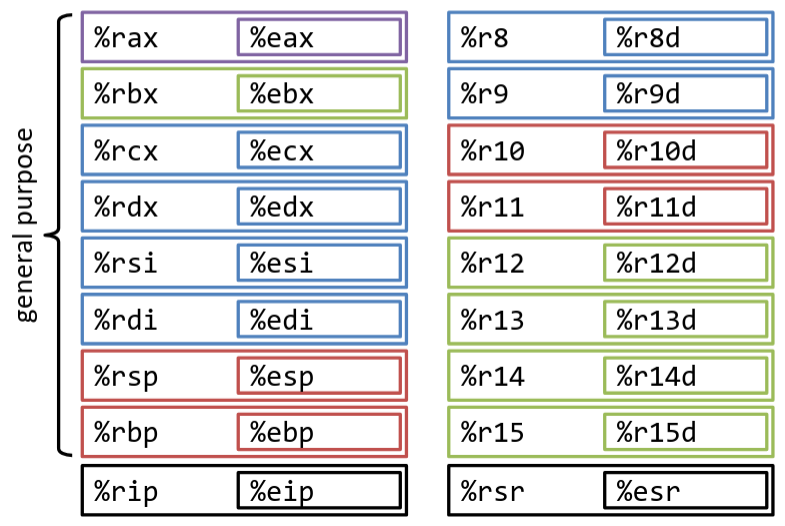
- purple: return
- red: caller saved (stack pointer, base frame pointer + 2 scratch register) <- use this
- blue: caller saved (parameters) <- use this
- green: callee saved (scratch)
for callee-saved: one needs to restore value after using
pushq %r12       # save original value
...
popq %r12        # restore original value
inline assembly:
int a=10, b;
__asm__ ("movl %1, %%eax; movl %%eax, %0;"
		:"=r"(b) // output operands, optional
		:"r"(a)  // input operands, optional
		:"%eax"  // list of clobbered registers, optional
);
or named:
int a=10, b;
__asm__ ("movl %[in], %%eax; movl %%eax, %[out];"
		: [out] "=r"(b) // output operands, optional
		: [in]  "r"(a)  // input operands, optional
		:"%eax"  // list of clobbered registers, optional
);
of course, it can be simplified:
int a=10, b;
__asm__ ("movl %[in], %[out]"
		: [out] "=r"(b) // output operands, optional
		: [in]  "r"(a)  // input operands, optional
);
if no variable changes, use volatile to prevent the compile from deleting it!
__asm__ volatile ("movb %bh (%eax)\n\t"); // \n\t for multiple instructions needed, here optional
#timestamp 2025-11-05
symbols
-
global: functions, global variables
-
local: static vars,
-
strong: function, initalized globals
-
weak: unitalized globals
-
multiple strong symbols are not allowed (linker error)
-
s.t. we know which one to use (1x strong, 1x weak -> use strong)
- this happens even if the weak/strong are not of same type!!
-> modern C: always mark extern (and -fno-common flag) s.t. there is no arbitrary choosing
libraries
static libraries (.a)
- multiple obj files in one file
- when compiling, always put static libraries at end
dynamic libraries
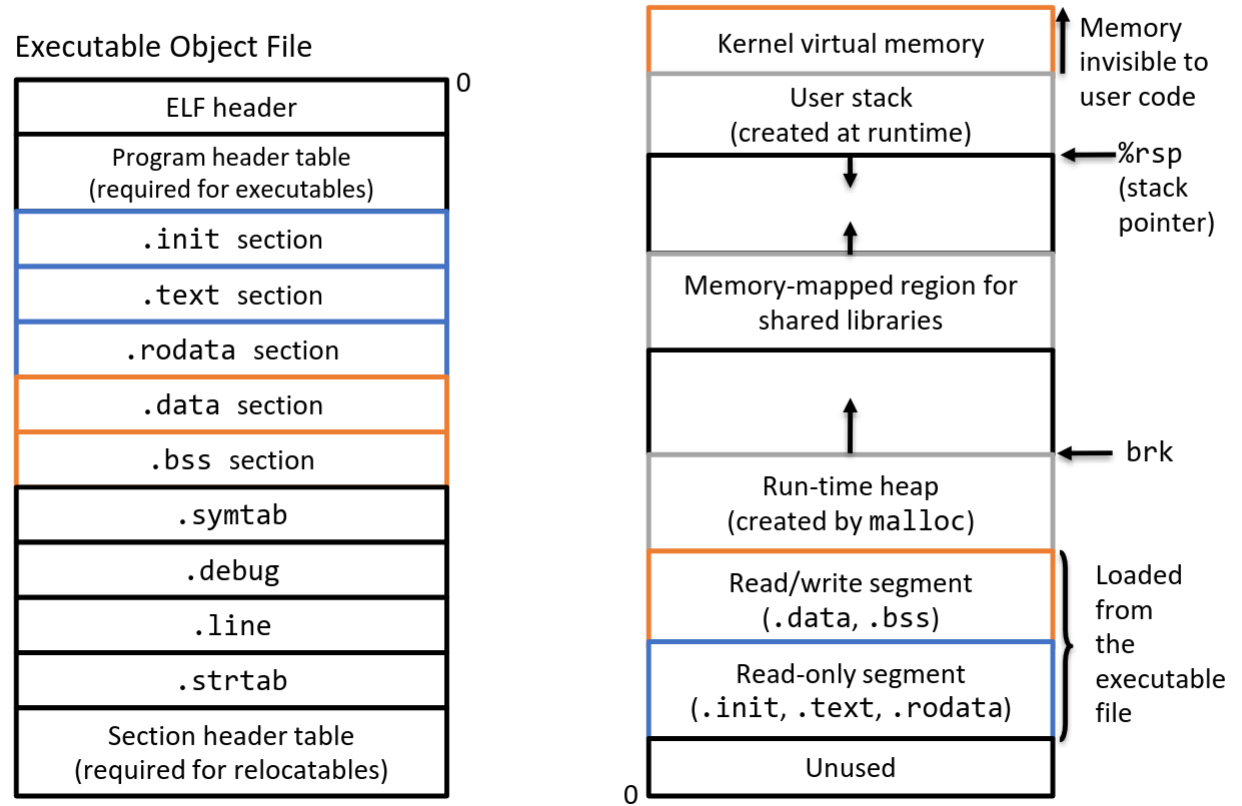
append library path:
export LD_LIBRARY_PATH=$LD_LIBRARY_PATH:$PWD
- static and dynamic libraries use the same amount of memory (since dynamic -> headers included)
#include "sth.c"-> preprocessor copies file
32-bit PC-relative displacement
A 4-byte signed number stored in the instruction that tells the CPU how many bytes to jump forward/backwards from the next instruction. (PC = Program Counter = %rip on x86)
e.g.
400406: e8 f5 00 00 00 callq 400500 <swap>
- current instruction:
e8(call) at0x400406 - next instruction (where the
%rippointer points to):0x400406 + 5 = 0x40040b - displacement (signed, little-endian):
f5 00 00 00->0xf5- jump to
%rip + 0xf5->0x400500
- jump to
CPU doesn't know the symbol name (
swap), it only sees the displacement
This comes from how the program is created:
- the compiler doesn't know
swap's final address -> writes instruction + placeholder, e.g.e8 00 00 00 00and adds a relocation entry - the linker assigns final addresses to all functions, computes displacement:
displacement = next_address (%rip) - next_instruction_address
- the CPU executes
callqat0x400406, reads displacement, jumps to right place - disassembly:
objumpread instruction, computes target address and names after the symbol table ->callq 400500 <swap>
#timestamp 2025-11-26
- read-read: can be parallelised
- read-write: too
- write-write: can be problematic, but this too
- write-read: -> problem
- lower bound: CPE is bound by critical path
- tell the compiler that for the lifetime of the restrict-annotated pointer it will be the only pointer used to access the underlying memory
- compiler does not check, programmer responsible exection (no run-time checks that it is the only pointer)
#timestamp 2025-12-03
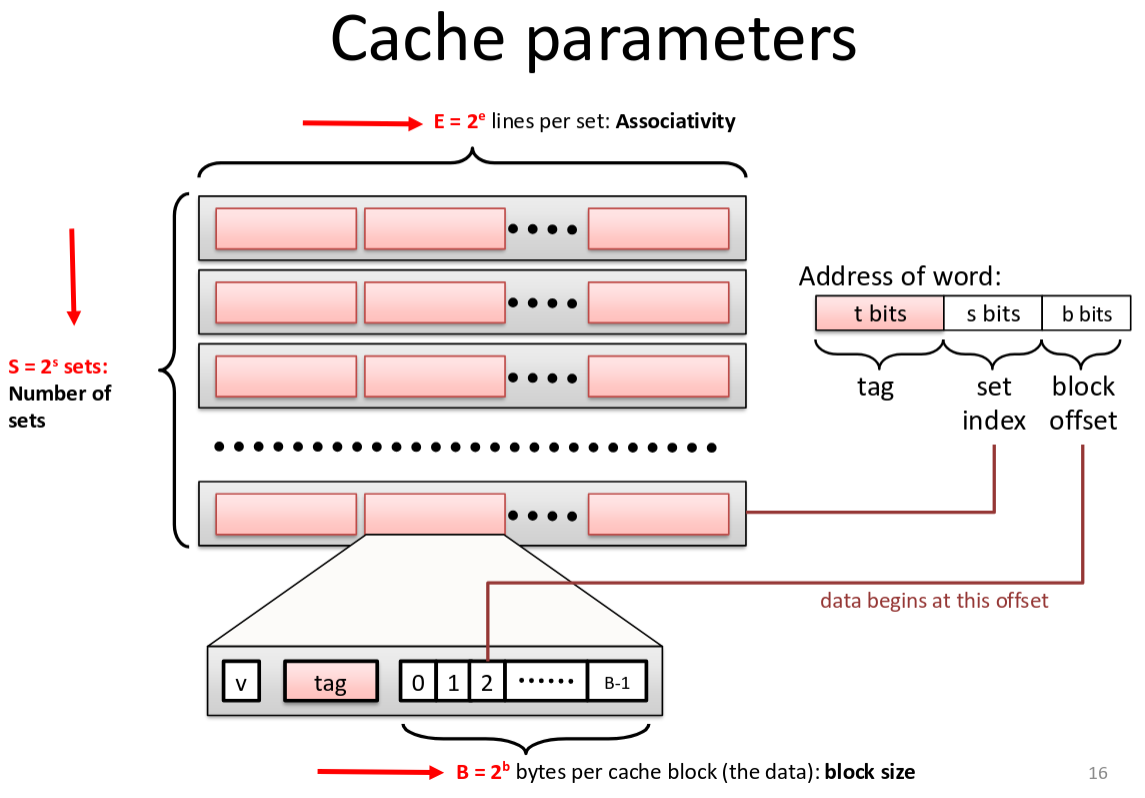
direct mapped
#timestamp 2025-12-10
write-through
- every time when write -> update value in memory ("write through cache to memory)
write-back
- only write to cache, update memory when other CPU try to access to memory
- often used today
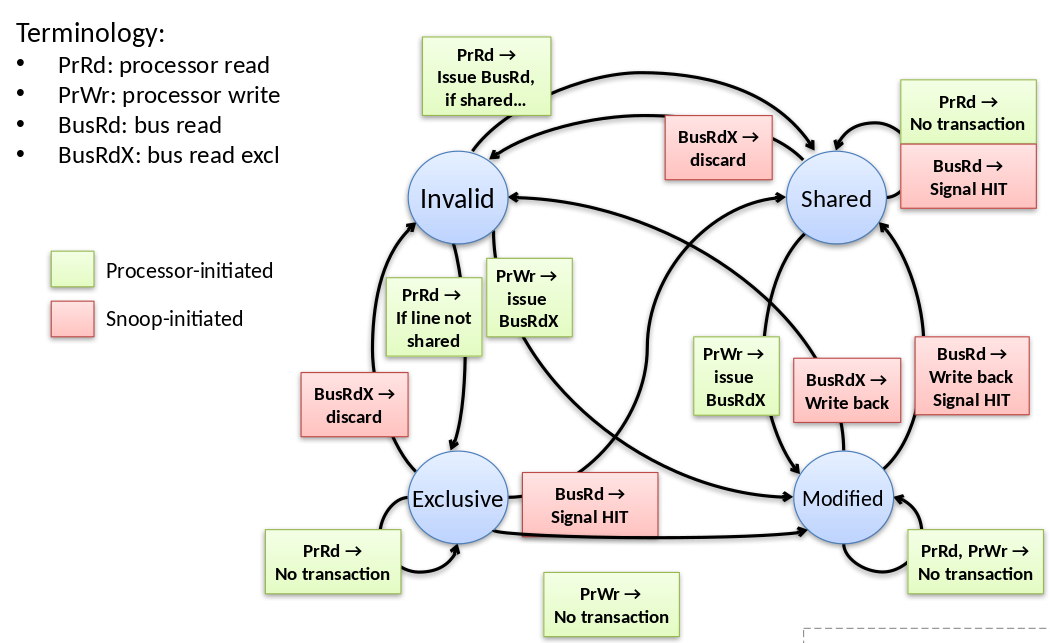
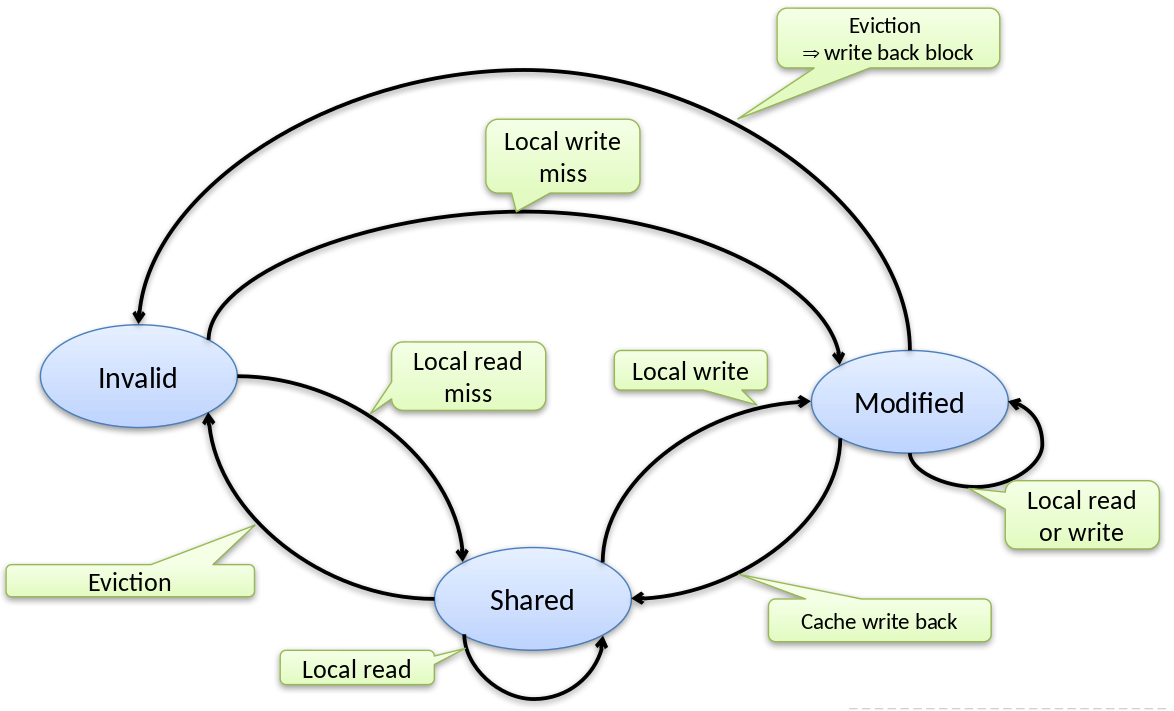
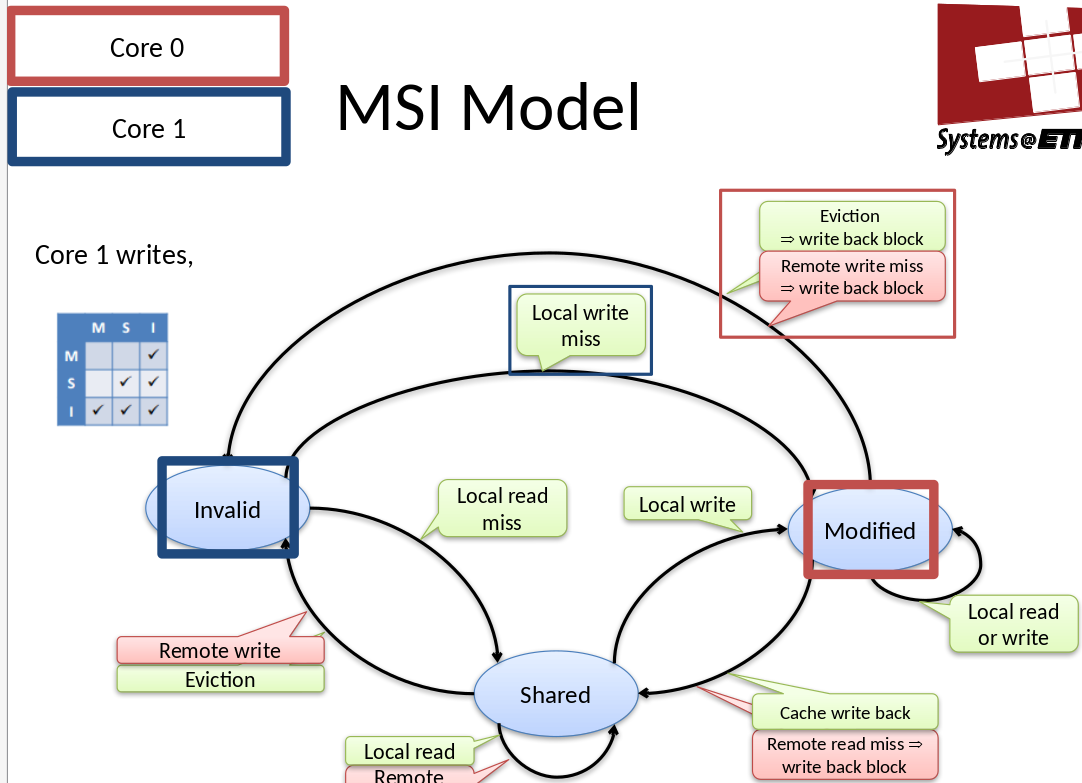
MSI
- M - modified: newest state, can read/write, but everywhere else outdated
- S - shared: newest state but also on other CPU caches, can read but have to write carefully
- I - invalid: not in cache or outdated
-> each cache line has a state (additional metadata)
local (processor) transitions:
remote (snooped) transitions
MESI
-
add exclusive state: newest state, and no one else has it
+ less state changes than ESI
- need to write back dirty data (no cache-cache transfer) -
state machine: